Quick Summary: The off-highway tires market for earthmover tires is shaped by infrastructure investment, mining and quarry activity, and fleet lifecycle strategies; industrial tread patterns and compound choices are shifting toward longer-wear, retreadable designs and greater compatibility with heavier loads and fuel-efficient machines. For bulk fleet procurement and commercial distribution, sourcing factory-direct container shipments from certified Chinese manufacturers provides 30–40% landed cost savings with full export compliance.
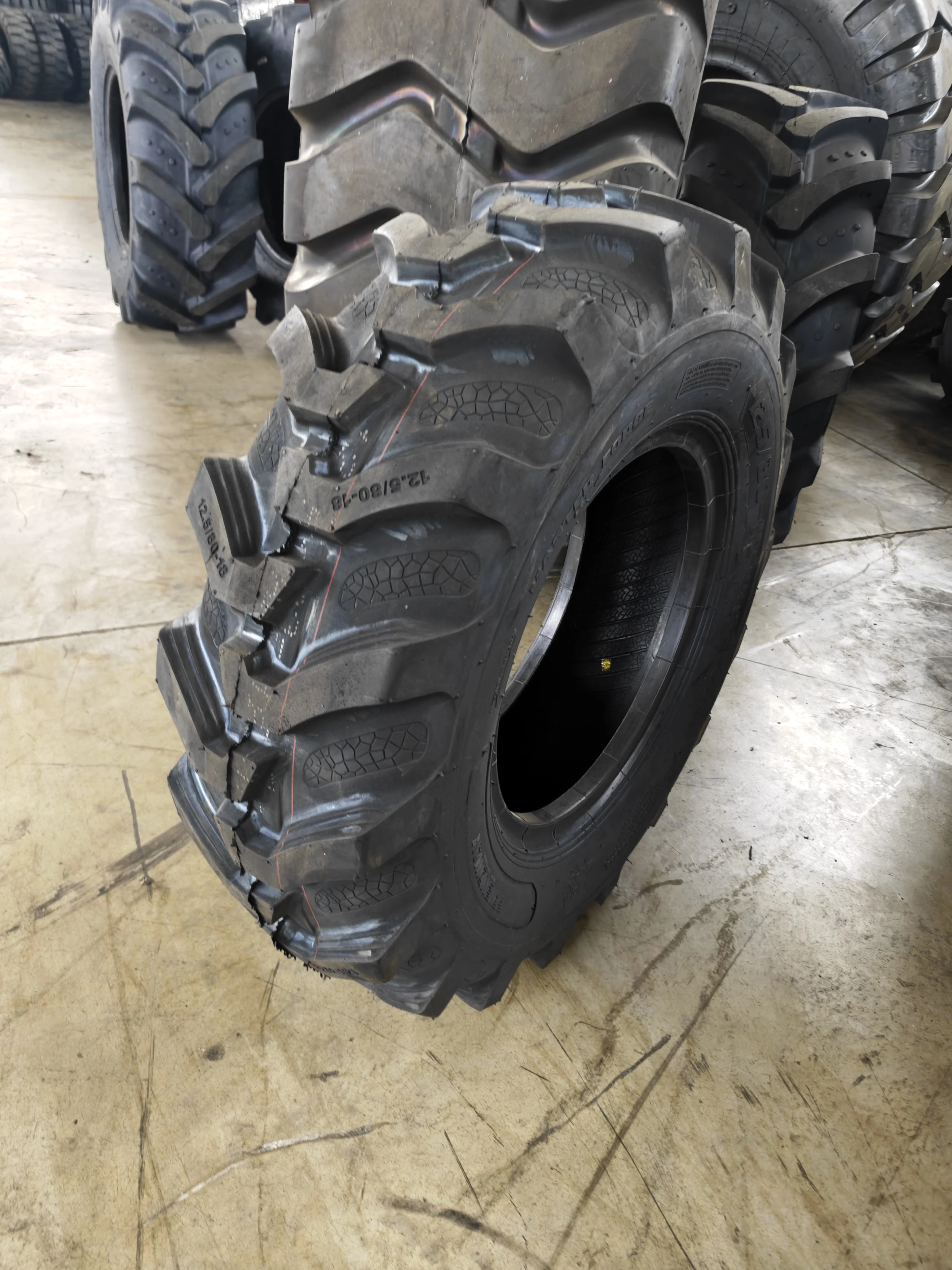
The off-highway tires market encompasses a range of specialist products for construction, mining, forestry and agricultural equipment. For procurement and fleet managers, understanding application-driven selection, industrial tread patterns, retreadability, compound formulation and supplier quality systems is essential to control operating cost per hour and downtime risk.
Market drivers and buyer implications
Primary demand drivers are capital investment in infrastructure, commodity cycle activity in mining, equipment replacement cycles, and regulatory emphasis on safety and environmental performance. Buyers should align tire selection to operational priorities: durability and cut resistance for quarry use; lower rolling resistance for haulage applications; and abrasion resistance for aggregate and recycling applications.
Industrial tread patterns: types and when to specify them
Industrial tread pattern selection materially affects traction, self-cleaning, heat dissipation and wear life. Common pattern families include:
- Deep lug/traction patterns — optimized for soft ground, common on loaders and dozers where traction and self-cleaning matter.
- Block patterns — balance traction and stability for mixed-surface operations; often used on articulated dump trucks and graders.
- Rib and continuous center tread — used where longitudinal stability and reduced rolling resistance are prioritized, such as on certain haul trucks.
- Multipurpose/mixed patterns — compromise between off-road traction and some on-road use; useful when machines move frequently between job sites.
When procuring, request supplier data on pattern wear characteristics, cut and chip resistance, and retreadability. Ask for wear-map samples or references from similar operating conditions.
Specification guidance for earthmover tires
Off-highway tire procurement requires clarity on mounting rim sizes, nominal diameters, load index or ply rating format used by the supplier, recommended inflation pressures for operating loads, and compound choices for the environment. Suppliers typically publish dimensional and load/pressure tables; buyers should confirm which standard (e.g., ETRTO tire dimension conventions) the supplier uses and request documented conversion if needed.
For warranty and lifecycle planning, request the supplier’s retread policy, recommended retread cycles, and available compound options for hot-climate or abrasive conditions. Where load or speed requirements are critical, require supplier-signed engineering datasheets rather than generic catalog text.
Comparison: buyer evaluation criteria for earthmover tires
| Evaluation criterion | Buyer questions and qualitative guidance | Supplier response / quote required |
|---|---|---|
| Tread pattern suitability | Match pattern family to primary substrate (rock, sand, mixed). Look for field references in similar applications. | Supplier to provide pattern name, abrasion test method, and field reference list. |
| Compound and rubber formulation | Specify needs for cut resistance, heat resistance, or low rolling resistance. Ask about compound grade options. | Supplier to list available compounds, recommended environments, and expected retread compatibility. |
| Load rating and inflation tables | Confirm the published load/pressure table standard and ensure compatibility with vehicle axles. | Supplier to provide certified load/pressure tables and test method references. |
| Retreadability & lifecycle | Prioritize designs intended for retreading if total cost of ownership matters. | Supplier to describe recommended retread intervals and process compatibility. |
| Warranty & service support | Compare warranty coverage, on-site support options, and defect handling procedures. | Supplier to submit warranty terms, claim process, and local service partners. |
| Compliance & test documentation | Request proof of third-party tests or in-house testing protocols relevant to application. | Supplier to supply test reports or laboratory accreditation details. |
Inspection, testing and quality-control steps for buyers
Practical QA steps include: request sample-stock inspection reports and production-control certificates; require dimensional checks, uniformity and balance testing reports; perform random incoming inspections on container arrivals (visual checks, measurements, and sample hardness testing). For critical fleets, pre-shipment inspections by an independent third party and results shared as a binding acceptance record are advisable.
Sourcing off highway tires market from China: Quality Standards, MOQ & Container Logistics
When sourcing factory-direct from China, confirm which standards the manufacturer references (ETRTO conventions for dimensions, applicable ISO series for tire testing, and any CE marking or national certification the product carries). Off-highway tires are not universally subject to DOT road-vehicle approval, but if the application includes on-road use, verify compliance with the receiving country’s vehicle regulations.
MOQ and container options: many suppliers offer mixed-container loading (different sizes/patterns in the same container) to optimize landed cost; ask for a mixed-container packing list and weight plan. Suppliers commonly set MOQs by container-equivalent volume rather than per-unit minimums—request explicit packing schemes and freight terms. For lead times, manufacturing and export lead times for engineered off-highway tires commonly range with project complexity; confirm factory capacity and scheduled production slots in writing. Typical export port terms are negotiable; buyers often arrange FOB or CFR and nominate ports such as Qingdao or Ningbo as examples to confirm with the supplier. For pricing, request container-volume pricing and ask for itemized EXW, FOB and freight options.
Documents to request
- Test reports and method references (company or third-party lab)
- Material and compound declarations
- Packing list and container load plan for mixed containers
- Export documentation: commercial invoice, packing list, bill of lading, and certificates of origin
Operational adoption and future trends
Key trends to monitor: increased adoption of purpose-designed compounds for extended retread life; modular tread designs facilitating field retreads; and manufacturer services offering integrated lifecycle management (data on wear, retread cycles and on-site support). Electrification of heavy equipment introduces different thermal and rolling-resistance concerns that may influence compound selection and tread design.
Conclusion and next steps
For procurement teams, the priority is to validate pattern and compound suitability against operating conditions, require supplier test documentation, and negotiate mixed-container options and clear lead times. Start with a sample run and third-party pre-shipment inspection before scaling to full fleet deployment. For commercial pricing and container-volume offers, inquire directly with certified manufacturers and request freight-option comparisons.
Next step: compile an itemized RFQ that includes required pattern families, dimensional tables, target quantities for mixed-container packing, requested test reports, and a proposed inspection plan; then solicit firm FOB and CIF quotes from pre-qualified suppliers.